Twenty years of SAS
Scholars Assisting Scholars: A backbone of student success
By Grant Guggisberg
Tuesday, Feb. 3, 2026
What started as a simple grant-funded tutoring initiative nearly two decades ago has since grown into the robust Scholars Assisting Scholars, or SAS, program that now serves as a pillar of academic support for the Carl R. Ice College of Engineering.
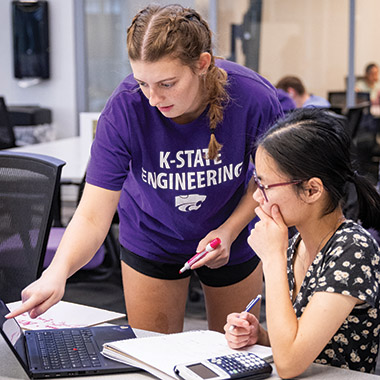 Initially funded by a National Science Foundation grant, SAS has evolved into a collegewide success story, touching the lives of thousands of students in the years since.
“SAS was originally intended to help provide academic support to underrepresented students in engineering,” said Amy Betz, associate professor and assistant dean for academic success. “But even before launching the service, they quickly realized this program would have really strong implications for all students in engineering.”
That purpose continues today, with SAS attracting more than 1,000 unique students annually, which accounts for nearly 80% of the first and second-year population taking core engineering courses at K-State.
The success of SAS is rooted in its innovative approach, moving beyond the traditional one-on-one tutoring model. The program features open, group drop-in tutoring, which Betz said makes the program much more accessible. However, the true difference maker has been the embedded tutor model and the resulting
exam reviews.
In addition to being high-achieving students who have already completed the course they are tutoring, SAS tutors are active participants in the current semester’s instruction, sitting in on lectures and taking notes to ensure they know exactly what instructors are teaching. This allows them to create highly effective, just-in-time exam reviews several days before a test, giving students a crucial opportunity to assess their knowledge and seek additional help.
“Not only do they know the material because they’ve had the class before, they know exactly what the instructor has covered,” Betz said. “They see the class through a different lens, which only adds to the value of the review materials for students utilizing SAS.”
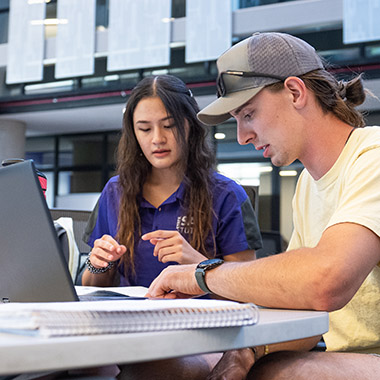 While the most visible metric of success is the sheer number of students served, the program’s impact extends to the tutors themselves. Every year, approximately 30 tutors gain valuable professional development, deepening their subject matter expertise and learning crucial soft skills they can use later on in their careers. The program even implemented a new certification process this past year to give tutors a verified credential and boost their confidence.
Over the years, one benefit the SAS program has imparted to students throughout the college is a shift in mindset when seeking university and college resources. The program changed its internal messaging from “Need help? Come to SAS” to “Want to be efficient? Come to SAS.” Betz believes this positive outlook helps students by removing barriers to accessing help and encouraging them to utilize other student success resources.
“We’re actually doing a study this year to see if going to SAS makes students more likely to use other campus resources,” Betz said. “My hypothesis is that yes, SAS helps students positively see the benefit of getting help from resources, rather than feeling like it’s a negative.”
To commemorate the 20-year anniversary, the college has planned a celebration for Feb. 27, 2026, inviting hundreds of previous tutors to share in the program’s legacy. From its grantfunded beginnings to its current status as a central, dedicated space in Engineering Hall, SAS continues to ensure the success and efficiency of the next generation of engineers.